How to Retrain Your Nervous System After Injury | Yoga, Breathwork & Neuroplasticity
There’s a moment that happens for many people living with chronic pain or serious injury where the conversation quietly changes.
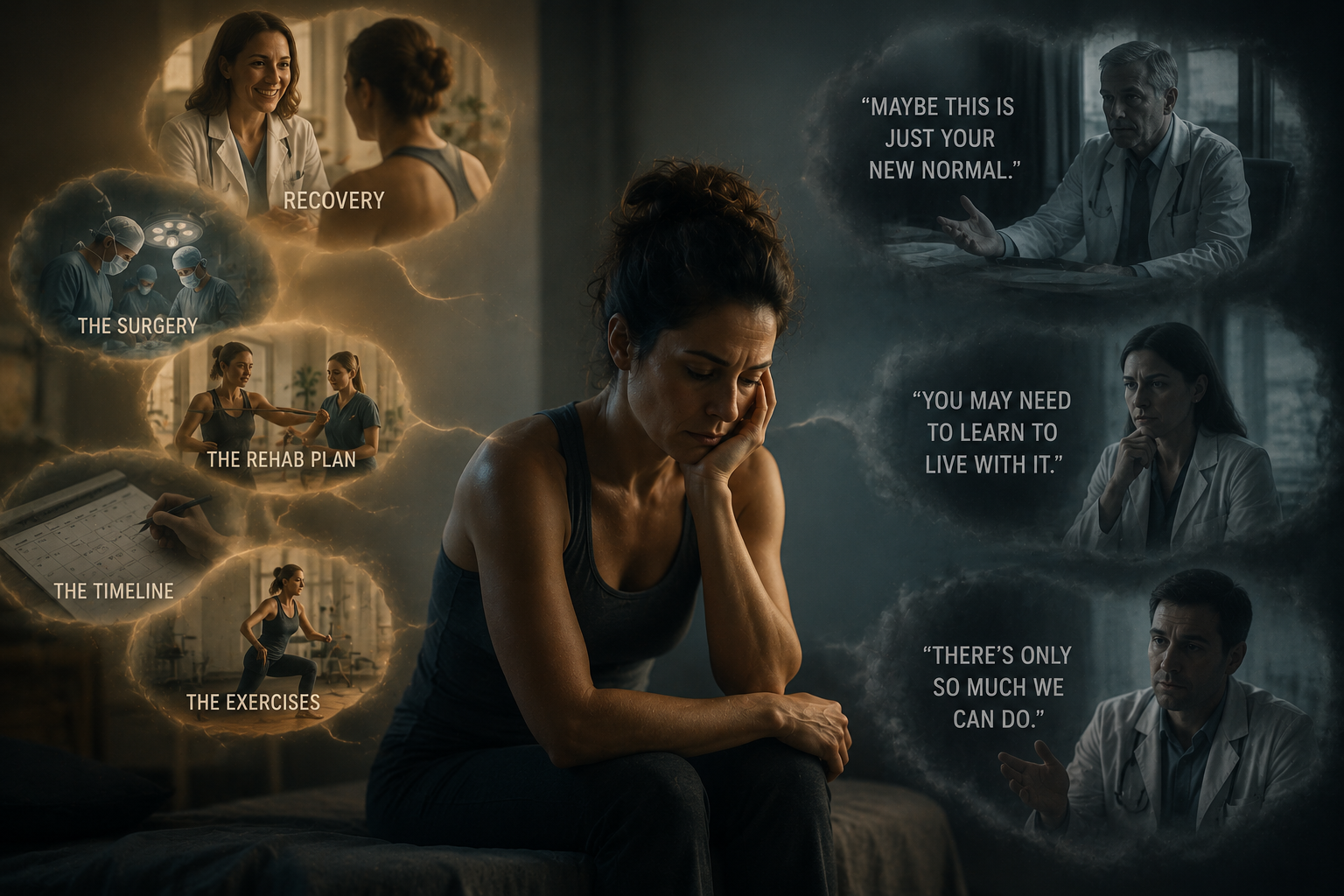
At first, everyone talks about recovery.
The surgery.
The rehab plan.
The exercises.
The timeline.
But eventually, if progress stalls long enough, the tone shifts.
You start hearing things like:
“Maybe this is just your new normal.”
“You may need to learn to live with it.”
“There’s only so much we can do.”
And when you’re the person living inside that body, those words land heavily.
For Krista Shirley, that moment came after multiple shoulder surgeries between 2019 and 2020 left her with severe nerve damage, chronic pain, and major loss of muscular function. Muscles that once worked automatically no longer responded. Movement became unpredictable. Pain became constant. Even basic actions carried fear, frustration, and exhaustion.
But what unfolded after that experience became the beginning of something much bigger than physical rehabilitation.
It became an exploration into the nervous system itself — how the brain adapts after injury, how breath changes pain perception, and how healing often requires much more than simply strengthening muscles again.
In her newest video on Reclaim Your Body with Krista Shirley, she shares how breathwork became one of the most important tools in rebuilding communication between her brain and body after nerve damage.
And perhaps more importantly, why so many people struggling with chronic pain, tension, injury, or nervous system dysregulation may be missing this piece entirely.
When Movement Alone Stops Working
Krista spent more than twenty years teaching yoga, body mechanics, and movement before her injury.
Like many movement professionals, she believed deeply in consistency, alignment, mobility, and strengthening the body through intelligent practice.
And those things absolutely matter.
But after losing nerve function, she found herself in a situation where movement alone was no longer enough.
The body could not simply be “pushed through” recovery.
Certain muscles no longer activated properly. Pain altered coordination. Protective tension patterns took over. The nervous system itself had changed.
That experience forced her to ask different questions.
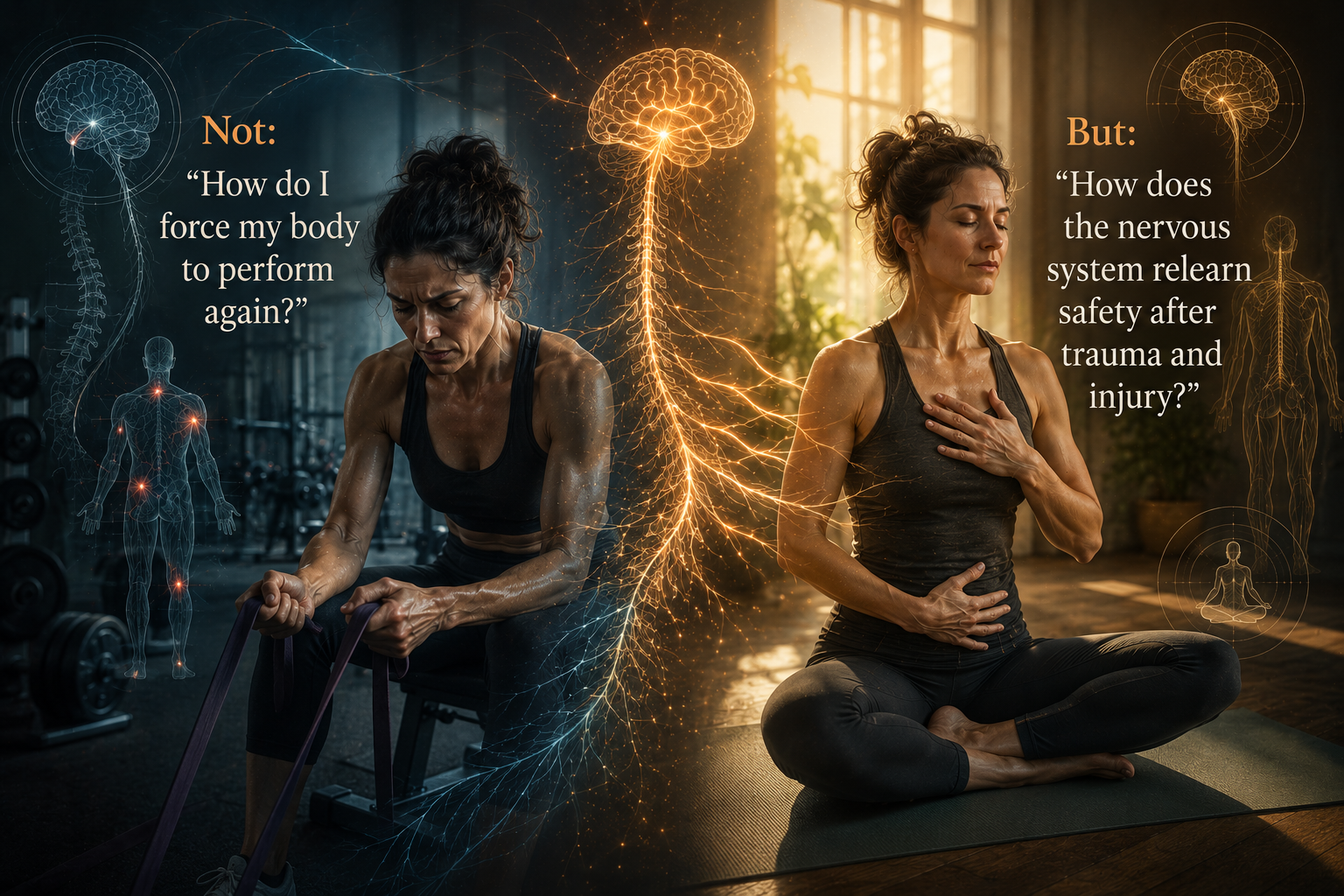
That question eventually became the foundation for what she now calls the Body Mechanics Method — a nervous-system-informed approach to healing that combines breathwork, mindful movement, body mechanics, and pain science.
Why Breathwork Matters More Than Most People Realize
Many people still think of breathwork as a relaxation technique.
Something calming.
Something meditative.
Something “nice to do.”
But modern neuroscience paints a much more fascinating picture.
Breathing directly influences the autonomic nervous system — the system responsible for survival, stress responses, muscle tension, heart rate, pain perception, and emotional regulation.
In other words:
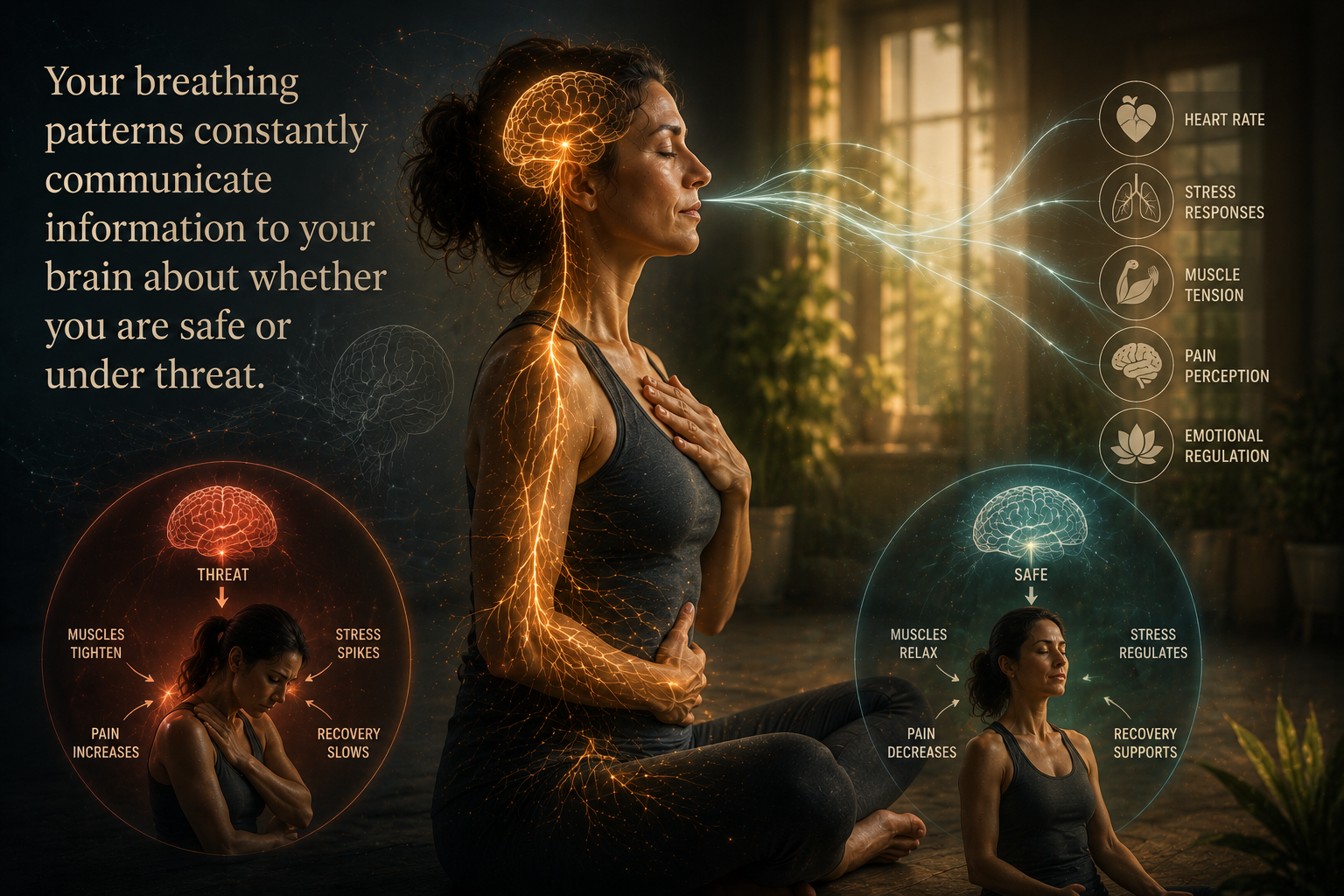
When breathing becomes shallow, rushed, or inconsistent — which commonly happens after injury or during chronic pain — the nervous system often remains in a protective state.
The body braces.
Muscles tighten.
Pain sensitivity increases.
Movement feels less coordinated.
Recovery becomes more difficult.
Krista explains in the video that this is one reason so many people feel stuck in cycles of pain and tension long after tissue healing should have occurred.
The nervous system is still acting as though danger is present.
And this is where breathwork becomes incredibly important.
Not because it magically “fixes” pain.
But because it changes the environment in which healing takes place.
The Nervous System Learns Through Safety
One of the most powerful themes in this video is the idea that healing is deeply connected to safety.
Not emotional safety alone.
Neurological safety.
Your brain is constantly evaluating:
Is this movement safe?
Can this area relax?
Should I protect?
Can I trust this experience?
When the nervous system perceives threat, it increases muscle guarding and reduces movement options automatically.
This is why people recovering from injury often feel:
disconnected from parts of their body
unable to relax certain muscles
fearful of movement
exhausted by persistent pain
frustrated that “nothing works”
Krista shares that after her own surgeries, she began noticing how even tiny moments of calm breathing changed her ability to move.
Not dramatically at first.
But subtly.
Her shoulders softened slightly.
Pain patterns shifted.
Certain movements felt less threatening.
The body became more responsive.
Over time, those small moments mattered enormously.
Because the nervous system does not learn primarily through force.
It learns through repetition, clarity, and safety.
How Breathwork Helps Retrain the Brain and Body
One of the most fascinating aspects of this conversation is how breathwork supports neuroplasticity.
Neuroplasticity is the brain’s ability to adapt, reorganize, and create new neural pathways.
After injury, especially nerve injury, the brain’s communication with the body can become disrupted. Areas may feel numb, disconnected, weak, painful, or difficult to coordinate.
Krista explains that conscious breathing helps restore awareness to these “offline” areas of the body.
And this is not just symbolic or emotional.
Research shows that slow diaphragmatic breathing influences areas of the brain connected to:
interoception (internal body awareness)
emotional regulation
motor control
pain perception
vagal tone
stress regulation
In simple terms:
breath helps the brain pay attention differently.
That matters tremendously during recovery.
Because when awareness improves, movement quality often improves too.
Healing After Injury Is Not Linear
One of the reasons this video feels so different from many wellness conversations online is that it doesn’t pretend healing is simple.
Krista speaks openly about frustration, fear, uncertainty, and the emotional reality of rebuilding movement after nerve damage.
There were moments where progress felt incredibly slow.
Moments where exercises failed.
Moments where movement felt foreign.
Moments where the body no longer felt trustworthy.
And that honesty matters.
Because many people living with chronic pain or injury feel isolated by unrealistic recovery narratives.
They feel like they’re failing if healing isn’t fast enough.
Or linear enough.
Or complete enough.
But nervous system healing is rarely linear.
Sometimes progress looks dramatic.
Sometimes it looks like finally taking a full breath without bracing.
Sometimes it looks like sleeping through the night.
Sometimes it looks like moving without fear for the first time in months.
Those changes may appear small externally.
Neurologically, they can be enormous.
Watch the Full Video
In this deeply personal and educational episode, Krista explores:
how breathwork affects the nervous system after injury
the role of neuroplasticity in recovery
chronic pain and nervous system regulation
why movement alone is sometimes not enough
how breath changes muscle guarding and tension
rebuilding trust with the body after trauma
the foundations of the Body Mechanics Method
🎥 Watch the full video here:
Introducing Reclaim Your Body

This video is part of a larger project Krista is currently developing called Reclaim Your Body — a six-week online program designed to help people reconnect with their bodies through:
breathwork
nervous system education
body mechanics
mindful movement
journaling
somatic awareness
pain science
emotional regulation practices
What makes this program different is that it’s not being created solely for athletes or advanced yoga practitioners.
It’s being built for real people navigating:
chronic pain
injury recovery
nervous system overwhelm
burnout
tension patterns
fear around movement
disconnection from the body
And importantly, this is not just for people local to Florida.
The program is being developed for people everywhere — accessible online from anywhere in the world.
Whether you’re in the United States, Canada, Europe, Australia, Asia, or beyond, this work is meant to reach anyone searching for a more compassionate and intelligent approach to healing.
Join the Newsletter for Course Updates
If this conversation resonates with you, the best next step is to join the Reclaim Your Body newsletter.
Krista will be sharing:
course updates
early access announcements
nervous system healing tools
breathwork practices
educational resources
reflections on pain, healing, and movement
✨ Join the newsletter here:
https://link.theyogashala.com/widget/form/qKNITbi8xXzVtp1iFpXa
A Different Conversation About Healing
Perhaps the most important message in this video is this:
Healing is not always about forcing the body to become what it once was.
Sometimes healing begins by learning how to listen differently.
To breathe differently.
To move differently.
To stop treating the body like a problem to conquer.
And instead, begin building a relationship with the nervous system based on trust, awareness, patience, and safety.
Because your nervous system is still listening.
And sometimes, the first real step toward healing is finally giving it a different conversation.


