How Breathwork Changes Chronic Pain: The Nervous System, Vagus Nerve & Healing
Pain affects far more than the body.
Over time, chronic pain influences how we move, sleep, think, breathe, and experience the world around us. It can alter our confidence, change our relationship with exercise, and create a constant sense of uncertainty about what our bodies are capable of.
For many people living with chronic pain, lingering injuries, post-surgical complications, nervous system dysregulation, burnout, or unexplained symptoms, healing can begin to feel frustratingly complex. Traditional treatments may help to a point, but many people eventually find themselves asking deeper questions:
Why does pain continue even when tissues have healed?
Why do symptoms worsen during periods of stress?
Why does the body sometimes feel stuck in patterns that don't seem to make sense?
These are the questions Krista Shirley explores in the first video of her new YouTube channel, Reclaim Your Body.
Drawing from both modern pain science and her own experience recovering from severe nerve damage, Krista explains why pain is not simply a physical experience—and why breathwork may be one of the most overlooked tools for supporting nervous system healing.
Pain Is Not Just Happening in the Body

One of the most important discoveries in modern pain science is that pain does not always directly reflect tissue damage.
While injury, inflammation, and structural issues can certainly contribute to pain, the nervous system plays a powerful role in determining how pain is perceived and experienced.
The brain continuously gathers information from multiple sources, including physical sensations, previous injuries, emotional stress, environmental cues, memories, sleep quality, and perceived safety. It then interprets those signals and determines how protective it needs to be.
When the nervous system perceives threat, pain signals often become amplified.
This doesn't mean the pain is imagined.
It means the nervous system is doing its job—sometimes too well.
For people living with chronic pain, this can create a difficult cycle. Increased pain creates more stress. More stress increases nervous system vigilance. Increased vigilance creates more tension, muscle guarding, and sensitivity. Over time, the body can become trapped in a persistent state of protection.
Understanding this relationship between pain and the nervous system is often the first step toward a more compassionate and effective approach to healing.
The Vagus Nerve and the Biology of Safety
One of the central themes of Krista's teaching is the concept of safety.
Not just emotional safety—but neurological safety.
The vagus nerve plays a major role in this process. As one of the primary communication pathways between the brain and body, it influences heart rate, digestion, stress responses, inflammation, emotional regulation, and the body's ability to shift into rest-and-repair states.
When breathing becomes shallow, rushed, or restricted—which commonly happens during periods of pain, stress, or anxiety—the nervous system receives signals that something may be wrong.
The body responds by becoming more protective.
Muscles tighten.
Breathing becomes less efficient.
Pain sensitivity can increase.
Movement often feels more threatening.
Intentional breathwork creates a different message.
As breathing becomes slower, steadier, and more rhythmic, the nervous system begins receiving signals that the environment may be safe enough to reduce its level of protection.
This does not instantly eliminate pain. But it can begin changing the conditions that contribute to pain persistence.
As Krista explains in the video, breathwork is not simply a relaxation technique. It is a direct way of communicating with the nervous system.
Why Breathwork Became Foundational in Krista's Recovery
What makes this conversation particularly powerful is that it isn't purely theoretical.
Krista's interest in nervous system healing emerged through her own experience with severe nerve damage, chronic pain, surgery, and rehabilitation.
During her recovery, she noticed something that many people recovering from injury eventually discover: movement alone wasn't always enough.
Certain exercises helped.
Others didn't.
Some days progress felt possible.
Other days it felt as though her body was working against her.
As she began studying neuroplasticity, pain science, breathwork, and nervous system regulation, she started recognizing how closely breathing patterns influenced pain levels, tension patterns, and movement quality.
Small shifts in breathing often created noticeable shifts in how her body responded.
Her shoulders softened.
Protective tension decreased.
Movement felt less threatening.
The nervous system became more receptive to learning.
Those observations became a major influence in what would later evolve into her Body Mechanics Method and the foundation of the Reclaim Your Body approach.
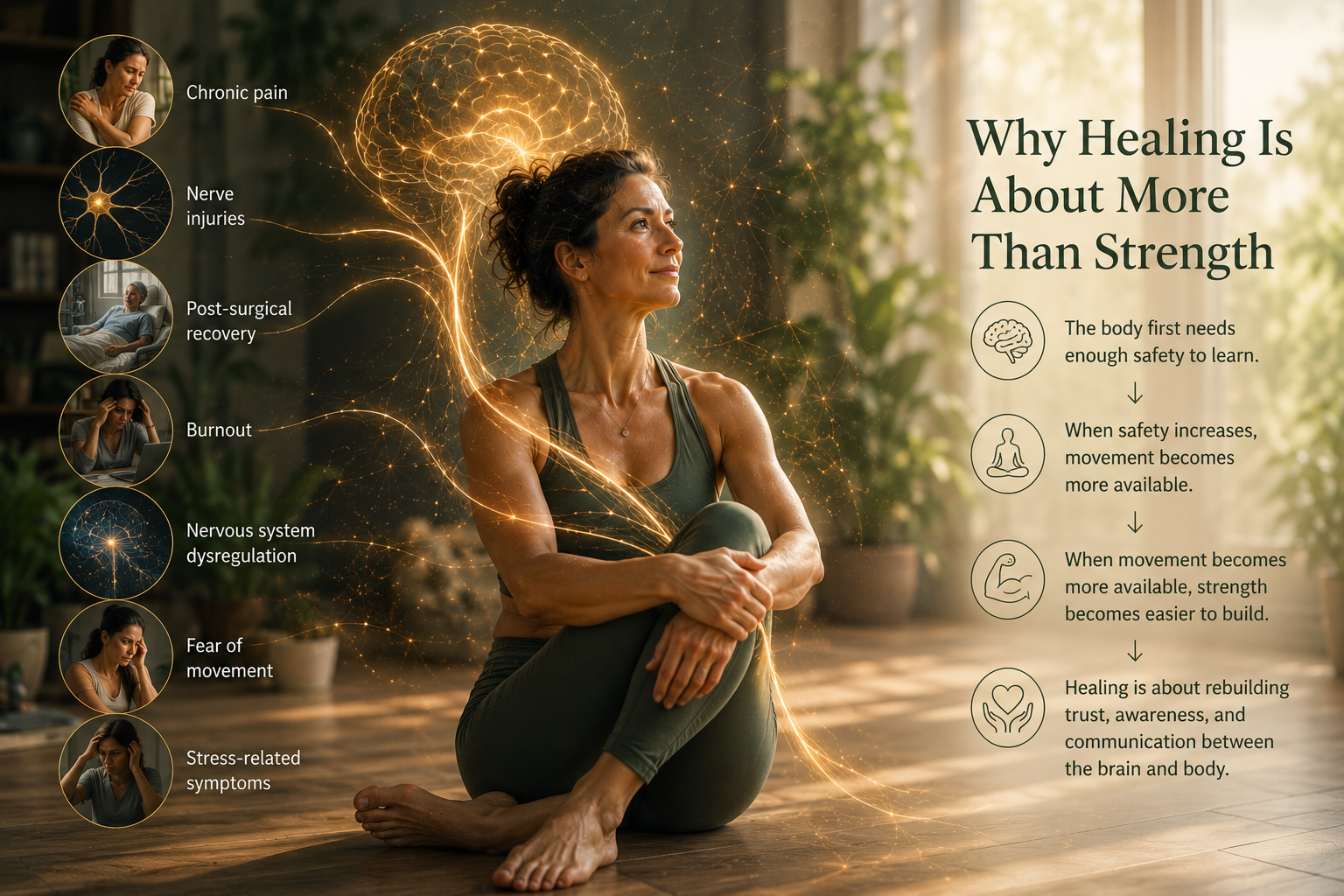
Why Healing Is About More Than Strength
Many people approaching recovery believe they need to become stronger before they can heal.
But nervous system healing often works in the opposite direction.
The body first needs enough safety to learn.
When safety increases, movement becomes more available.
When movement becomes more available, strength becomes easier to build.
This perspective is especially important for individuals navigating:
Healing is rarely a matter of forcing the body to comply.
More often, it involves rebuilding trust, awareness, and communication between the brain and body.
That process begins with understanding how the nervous system works—and learning how to support it rather than fight against it.
Watch the Full Video
In this educational and deeply personal conversation, Krista explores:
How chronic pain affects the nervous system
Why stress amplifies symptoms
The connection between breathwork and the vagus nerve
How safety influences healing
Why breathwork changes pain perception
The role of nervous system regulation in recovery
How yoga and pain science intersect
🎥 Watch the full video here:
Introducing Reclaim Your Body
This video serves as the introduction to a much larger body of work currently in development.
Reclaim Your Body is an upcoming six-week online program designed to help individuals better understand the relationship between chronic pain, nervous system regulation, breathwork, body mechanics, and mindful movement.
The course will combine:
Breathwork practices
Nervous system education
Pain science
Mindful movement
Body mechanics
Journaling
Somatic awareness
Emotional regulation tools
Most importantly, it is being created for people everywhere—not just those local to Florida.
Whether you're navigating chronic pain in the United States, recovering from injury in Australia, managing nervous system overwhelm in Europe, or rebuilding trust in movement anywhere else in the world, this program is being designed to provide practical tools that can be applied from home.
Join the Newsletter for Course Updates
If this conversation resonates with you, the best next step is to join the Reclaim Your Body newsletter.
Subscribers will receive:
Early course updates
Nervous system healing resources
Breathwork practices
Pain science education
Somatic healing tools
Early access opportunities
✨ Join the newsletter here:
https://link.theyogashala.com/widget/form/qKNITbi8xXzVtp1iFpXa
A Different Conversation About Healing
One of the most powerful ideas in this video is that healing is not created through force.
It is created through relationship.
A relationship with the body.
A relationship with the nervous system.
A relationship with awareness, breath, and safety.
For many people, chronic pain creates a feeling of being trapped inside a body that no longer feels trustworthy.
But healing does not always begin by trying to control the body more aggressively.
Sometimes healing begins by listening more carefully.
By understanding what the nervous system is communicating.
By creating conditions where safety can emerge.
And by discovering that the body may not be working against you after all.
It may simply be waiting for a different conversation.


